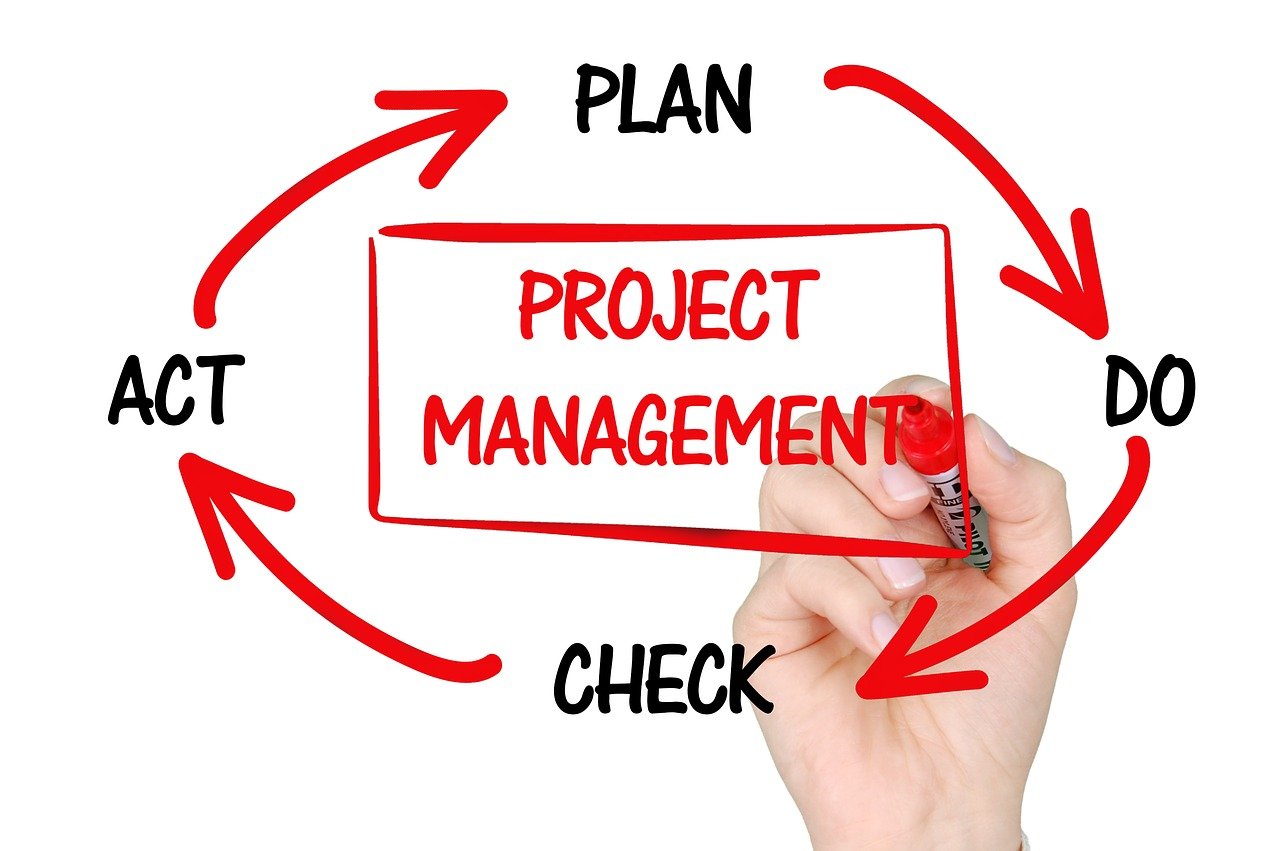
In the modern corporate world, execution is the ultimate differentiator. Organizations regularly develop brilliant strategies, innovative product concepts, and ambitious growth targets, yet a significant percentage of these initiatives falter during the implementation phase. Projects miss deadlines, exceed budgets, and fail to deliver the specific features promised to stakeholders. These failures are rarely caused by a lack of technical talent or inadequate funding; they are almost always driven by systemic flaws in project management methodology.
Delivering successful project outcomes requires moving past reactive firefighting and adopting a proactive, structured framework. Project management is not merely an administrative exercise in tracking tasks and building spreadsheets. It is the disciplined application of communication strategies, risk mitigation processes, resource optimization, and stakeholder alignment. By instilling order into complex environments, project managers can reliably steer initiatives from their initial conceptualization to flawless final delivery.
Defining the Absolute Parameters of Project Scope
The foundation of every successful project is laid during the initiation phase. The most frequent killer of project health is scope creep—the gradual, unapproved expansion of project requirements, features, or deliverables mid-stream. Scope creep typically begins with seemingly minor, harmless requests from stakeholders that collectively derail the entire timeline and budget.
To prevent this decay, project leaders must construct a comprehensive Project Scope Statement before any execution begins. This document must explicitly define what is included in the project, but more importantly, it must explicitly state what is excluded.
-
Establish Clear Baseline Deliverables: Secure signed agreements from all key decision-makers on the exact boundaries of the final product or service.
-
Implement Formal Change Control Procedures: Mandate that any new feature request submitted after the project starts must undergo a formal review process. This process must evaluate the modification’s exact impact on the timeline, required human resources, and total project cost before receiving approval.
-
Break Deliverables Down via a Work Breakdown Structure: Deconstruct large, complex milestones into distinct, manageable work packages. This granular visibility helps teams estimate timelines accurately and prevents hidden tasks from surfacing late in the production cycle.
Structuring the Optimal Communication Matrix
Miscommunication is the primary source of friction within cross-functional teams. When developers, marketers, designers, and executives operate on different assumptions, execution fractures. People waste valuable hours working on conflicting priorities or waiting indefinitely for critical input from other departments.
Project managers must establish a formal Communication Plan at the absolute outset of the initiative. This matrix defines who needs information, what specific updates they require, how that data will be delivered, and how frequently meetings will occur.
Relying entirely on real-time meetings often reduces operational velocity. Instead, modern project management favors asynchronous alignment for standard status updates. Team members use centralized progress dashboards to view task ownership, milestone completions, and current blockers. Real-time meetings should be strictly reserved for strategic problem-solving, resolving complex cross-departmental bottlenecks, and conducting high-impact milestone reviews. By filtering out structural communication noise, project leaders protect their team’s focused deep-work time while maintaining absolute organizational transparency.
Proactive Risk Management and the Pre-Mortem Framework
Most project teams treat risk reactively, creating mitigation strategies only after a crisis occurs. This defensive posture increases operational costs and forces the team into a continuous state of stress. Exceptional project managers operate with a predictive mindset, systematically mapping out potential failure modes long before the first line of code is written or the first asset is produced.
A highly effective exercise for achieving this foresight is the project pre-mortem. Before the project launches, the team gathers under the hypothetical assumption that the project has failed catastrophically. The team then works backward to identify the exact vulnerabilities that caused the failure.
The insights gained from this exercise are compiled into a dynamic Risk Register. This register logs every identified technical, financial, and logistical risk, calculates its probability and impact, assigns a dedicated owner, and outlines pre-approved mitigation plans. If a key supplier experiences a sudden delay or a critical team member falls ill, the project manager does not panic. They immediately execute the pre-arranged contingency plan, preserving momentum and isolating the disruption before it impacts the critical path.
Optimizing Human Resource Velocity and Capacity Tracking
Managing a project effectively requires a deep, accurate understanding of team capacity. A common mistake among inexperienced managers is assigning tasks based on pure availability rather than specific skill sets, or scheduling teams at 100 percent maximum capacity. Operating at full capacity leaves zero margin for error, meaning a single delayed task creates a compounding bottleneck that derails subsequent milestones.
Project managers must prioritize resource leveling and capacity planning. This involves assessing the historical velocity of the team—the actual rate at which they complete specific tasks—rather than relying on idealistic, best-case-scenario estimates.
Managers should deliberately schedule teams at roughly 80 percent capacity, leaving a 20 percent buffer zone to absorb unexpected technical complications, mandatory administrative adjustments, or personal leave. Furthermore, project leads must monitor for burnout by tracking task distribution. If a small percentage of elite performers are carrying the vast majority of critical-path tasks, the manager must rebalance the workload. Distributing tasks equitably across the team maintains long-term structural velocity and prevents high-performing talent from experiencing physical and mental exhaustion.
Implementing Agile Iterations and Continuous Feedback Loops
The traditional waterfall methodology—where a project is fully planned upfront and executed in long, sequential phases—is increasingly brittle in fast-moving market environments. If a project takes twelve months to build without user feedback, the team risks delivering a product that is already obsolete or misaligned with current consumer preferences upon arrival.
Adopting an iterative, agile framework allows project teams to deliver value incrementally. By breaking down the overarching timeline into short, two-to-four-week production sprints, the team focuses on producing functional, testable increments of work.
At the conclusion of each sprint, the team conducts a formal sprint review and a retrospective analysis. The review presents the functional work to stakeholders to secure immediate, real-world feedback, allowing the project team to make small, cost-effective course corrections early. Simultaneously, the retrospective allows the team to critique its own internal processes, evaluating what worked well and what operational friction needs to be eliminated in the next cycle. This continuous feedback loop ensures the final deliverable matches the actual market reality rather than a static plan devised months prior.
Guarding the Critical Path and Embracing Data Maturity
Every project contains a specific sequence of dependent tasks that dictates the absolute minimum time required to complete the initiative. This sequence is known as the Critical Path. A delay in any single task along this path automatically extends the final project delivery date, whereas delays in non-critical tasks have a built-in buffer zone before affecting the master timeline.
Project managers must maintain continuous, unyielding focus on critical-path activities. By utilizing modern data analytics and earned value management, project leaders can track real-time cost variance and schedule variance.
If data metrics reveal that a critical-path task is slipping, the manager must immediately intervene. This may involve shifting non-critical resources to reinforce the bottleneck, a process known as project crashing, or overlapping sequential tasks where possible, known as fast-tracking. Relying on objective performance metrics rather than vague verbal assurances from team members allows project leaders to spot deviations instantly, giving them the runway required to apply corrections before a minor delay transforms into an official milestone failure.
Frequently Asked Questions
What is the distinction between a project milestone and a standard task?
A standard task represents the specific, day-to-day action items required to complete a piece of work, such as writing a draft or compiling a data set. A milestone is a significant, zero-duration reference point along the project timeline that marks the completion of a major phase or a critical deliverable, such as securing stakeholder approval on a design prototype. Milestones serve as the primary markers used to communicate high-level progress to external executives.
How should a project manager handle a stakeholder who constantly demands out-of-scope changes?
When handling demanding stakeholders, a project manager must avoid emotional confrontation and rely instead on data-driven parameters. When a stakeholder requests an out-of-scope change, the manager should present a formal impact analysis illustrating exactly how the modification will alter the project’s total cost, delivery date, and resource allocation. Forcing the stakeholder to choose between extending the deadline, increasing the budget, or delaying the feature until a future phase preserves the integrity of the project scope.
Why is the concept of psychological safety critical for accurate project tracking?
If a project culture lacks psychological safety, team members will hide errors, downplay delays, and report that everything is on track out of fear of corporate reprisal. This lack of transparency blinds the project manager to real operational challenges until it is too late to fix them. Cultivating safety ensures that employees feel comfortable reporting blockers and failures early, allowing the team to collaborate on solutions before the issue threatens the master timeline.
How does project fast-tracking differ from project crashing when accelerating a timeline?
Fast-tracking is a schedule compression technique where activities that would normally be performed sequentially are run in parallel for a period, which increases the risk of rework but adds no direct financial cost. Crashing involves injecting additional capital or human resources into critical-path tasks to compress the timeline, which minimizes schedule risk but directly inflates the project’s financial expenditure.
What is the standard formula for calculating the contingency reserve budget?
Project teams rarely guess the exact cost of unexpected hurdles, so they establish a contingency reserve budget. This reserve is calculated using Expected Monetary Value analysis, which multiplies the estimated financial impact of an identified risk by its statistical probability of occurrence. Summing these values across all risks in the register yields an empirical, data-backed contingency reserve, moving far beyond arbitrary percentage guesses.
How do project managers effectively manage dependencies between separate external vendors?
Managing complex cross-vendor dependencies requires establishing a centralized Master Interface Schedule that maps out the touchpoints where one vendor’s output becomes another vendor’s input. The project manager must establish standardized communication protocols and force vendors to agree on common file formats, technical specifications, and delivery quality metrics. Building regular joint verification reviews into the timeline prevents vendors from shifting blame when integration issues arise late in the process.