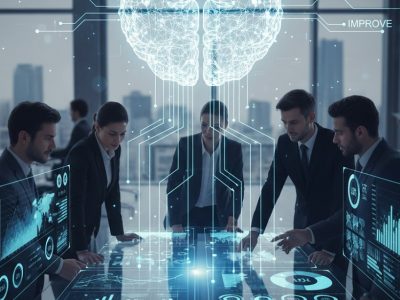
The responsibilities of Environmental, Health, and Safety (EHS) professionals have always been demanding. Tasked with protecting workers, maintaining compliance, and responding to evolving risks, EHS managers play a critical role in modern organisations. But as artificial intelligence (AI) transforms the industrial landscape, their role is undergoing a significant evolution.
Rather than replacing human oversight, AI is offering EHS leaders a powerful toolkit for smarter, faster, and more proactive decision-making. As highlighted in this guide on AI and EHS roles, the next generation of safety leadership will be defined by collaboration between human experience and machine intelligence.
The Traditional Scope of EHS Management
Historically, EHS teams have focused on policy development, training, incident response, and compliance reporting. Much of this work is manual—conducting inspections, filling out forms, reviewing footage, or reacting to incidents after they occur.
This reactive model has limitations. Despite best efforts, human attention is finite, and many safety hazards go unnoticed until it’s too late. Add in expanding regulations, resource constraints, and cross-site coordination, and it’s easy to see why safety teams often feel overwhelmed.
Where AI Enters the Picture
AI technologies, particularly computer vision and predictive analytics, are changing how risks are detected, monitored, and mitigated. These tools don’t aim to replace EHS professionals—they augment their capabilities.
By analysing live video feeds, AI systems can:
- Detect PPE violations in real time
- Monitor for unsafe behaviours like improper lifting or unauthorized access
- Send instant alerts for hazardous conditions
- Generate compliance reports with visual evidence
This automation reduces administrative burdens while surfacing high-risk patterns that humans might miss. As a result, EHS managers can shift from task-based work to strategic leadership.
Smarter Decisions Through Better Data
One of the most powerful impacts of AI is the generation of real-time, high-quality data. With continuous input from across a facility or network of sites, safety leaders gain a holistic view of workplace risk.
Patterns emerge that reveal:
- Which departments or zones have higher incident rates
- When and where near misses are most frequent
- How often rules are violated and under what conditions
Armed with this insight, EHS leaders can prioritise interventions, justify investments, and tailor training based on need—not guesswork.
Redefining the EHS Skill Set
As AI becomes embedded in EHS workflows, professionals must adapt. This doesn’t mean becoming data scientists, but it does mean developing digital fluency. Skills in analytics interpretation, change management, and system integration will become increasingly valuable.
Organisations should support EHS teams with upskilling initiatives that empower them to harness technology effectively. This ensures AI enhances—not disrupts—the existing culture of safety and accountability.
Bridging Human Judgment and Machine Precision
AI is excellent at recognising patterns, identifying anomalies, and providing alerts. But it cannot understand nuance, context, or intent—the strengths of experienced EHS professionals. The future lies in combining both strengths.
For instance, AI might detect frequent violations in a certain area. A safety leader, informed by on-the-ground experience, can then uncover the root cause—perhaps poor signage, equipment placement, or unclear training materials—and implement a human-centred solution.
This symbiosis between human judgment and machine precision will define the next era of safety excellence.
From Compliance to Prevention
The integration of AI into EHS systems signals a broader shift from compliance-based thinking to true prevention. Instead of documenting what went wrong, organisations can prevent incidents before they occur, saving lives, reducing downtime, and improving culture.
It also transforms EHS from a cost centre to a strategic asset. Proactive risk management supported by AI translates into better insurance terms, stronger brand reputation, and measurable operational resilience.
In the coming years, the most effective safety leaders won’t just manage incidents—they’ll prevent them through data-informed strategies and continuous monitoring powered by AI.
Strengthening Collaboration Across Departments
Modern EHS professionals operate in dynamic environments where cross-functional collaboration is critical. From operations and HR to legal and facilities teams, safety intersects with every department. AI strengthens these relationships by offering a common data foundation.
Shared dashboards, automated notifications, and clear metrics ensure everyone has visibility into safety performance. This transparency reduces silos and enables collective ownership of risk mitigation efforts across the organisation.
Supporting Change Management in AI Adoption
Successfully integrating AI into safety workflows doesn’t just require technology—it demands cultural readiness. EHS professionals are often the bridge between frontline workers and corporate leadership, and their role in managing this change is essential.
AI systems may raise concerns among workers about surveillance or job displacement. EHS leaders can address these concerns by clearly communicating how AI enhances safety without replacing human roles, ensuring that technology is seen as a support mechanism, not a watchdog.
Proactive education, feedback loops, and involvement in AI deployment help foster trust and smooth adoption.
Making the Business Case for AI in EHS
Despite its advantages, AI adoption often requires upfront investment. EHS managers who understand the technology are better equipped to build a compelling business case.
They can demonstrate ROI through metrics like:
- Reduction in lost-time injuries
- Lower insurance premiums due to improved safety scores
- Fewer OSHA or regulatory citations
- Increased near-miss reporting and hazard identification
Framing AI as a risk-reduction tool that also drives operational efficiency makes it an easier sell to budget holders.
Looking Ahead: The EHS Role in an AI-Augmented Future
The EHS profession is at an inflection point. As digital transformation accelerates, safety leaders have the opportunity to redefine their impact within the organisation. By embracing tools like AI, they shift from enforcers of compliance to enablers of progress.
In this evolving landscape, the best EHS leaders will be those who:
- Understand how to interpret and act on AI-generated insights
- Champion ethical, privacy-conscious safety tech adoption
- Facilitate collaboration between humans and intelligent systems
- Build resilient cultures that value both accountability and innovation
Rather than being displaced by AI, EHS professionals are poised to lead its responsible integration—creating safer, smarter, and more adaptable workplaces in the process.
The journey ahead for EHS professionals is one of evolution, not replacement. With AI as a partner, they can elevate their work—moving from compliance checklists to strategic, real-time safety leadership that protects people and powers progress.